

Our services enhance asset reliability and availability by reducing costs, identifying inefficiencies, closing performance gaps, and fostering a culture of continuous improvement. We’ve shown how Bookkeeping for Etsy Sellers to convert a ratio to a decimal and to a fraction, but did you know that you can also convert a ratio to a percentage? Divide the left side of the ratio by the right side, or use our ratio to decimal calculator.
What is 1 cm vs inches?
Here, we are calculating the contribution margin on a per-unit basis, but the same values would be obtained if we had used the total figures instead. The 60% CM ratio implies the contribution margin for each dollar of revenue generated is $0.60. The companies that operate near peak operating efficiency are far more likely to obtain an economic moat, contributing toward the long-term generation of sustainable profits. The best contribution margin is 100%, so the closer the contribution margin is to 100%, the better.
How to Calculate the Contribution Margin Ratio
For instance, negotiating better supplier terms or improving operational efficiencies can lower costs without compromising quality. Businesses must analyze cost structures to identify savings opportunities while maintaining competitive pricing. Accurate reporting of these costs ensures compliance with accounting standards like GAAP or IFRS.
- We’ll now move on to a modeling exercise, which you can access by filling out the form below.
- However, this implies that a company has zero variable costs, which is not realistic for most industries.
- The overarching objective of calculating the contribution margin is to figure out how to improve operating efficiency by lowering each product’s variable costs, which collectively contributes to higher profitability.
- Contribution margin (CM) ratio is an important input in calculation of break-even point, which is the level of sales (in units or dollars) at which a business is neither making profit nor incurring loss.
The Product Boss
For conversions of units we say that there are 2.54 centimeters per inch and write it as 2.54 cm/in. Inches (in) will cancel, and we are left with centimeters (cm) units in the answer. For this section of the exercise, the key takeaway is that the CM requires matching the revenue from the sale of a specific product line, along with coinciding variable costs for that particular product.
Software & Cyber Engineering
- The product revenue and number of products sold can be divided to determine the selling price per unit, which is $50.00 per product.
- This metric is typically used to calculate the break even point of a production process and set the pricing of a product.
- Breakeven point in dollars equals total fixed costs divided by contribution margin ratio and breakeven point in units of sales equals total fixed costs by contribution margin per unit.
- In the dynamic world of business, understanding key financial indicators is essential for effective decision-making.
- Let’s say we have a company that produces 100,000 units of a product, sells them at $12 per unit, and has a variable costs of $8 per unit.
Assisting the DoD through critical maintenance and overhaul periods with logistics planning, ILS Certifications, Technical Referrals, and Diminishing Manufacturing Sources and Material Shortages (DMSMS), and asset management. Supporting the DoD during critical maintenance and overhaul phases with logistics planning, ILS certifications, technical referrals, DMSMS management, and asset management. First, cm ratio is equal to 1 – ratio. convert the ratio to a decimal by dividing the left side by the right side. Ratios can be scaled larger or smaller in the same proportion to the original. To scale it, simply multiply the left and right sides by the scaling factor. To reduce a ratio, find the greatest common factor of the left and right sides.

It can be calculated on a per-unit basis, or as a ratio, often expressed as a percentage. The break-even point in units is calculated by Online Accounting dividing total fixed costs by the contribution margin per unit. For example, if fixed costs are $10,000 and the contribution margin per unit is $40, 250 units must be sold to break even. This insight helps businesses set realistic sales targets and evaluate how changes in costs or strategies impact profitability. The contribution margin (CM) ratio is equal to total sales revenue minus variable costs to the business, divided by total sales revenue.
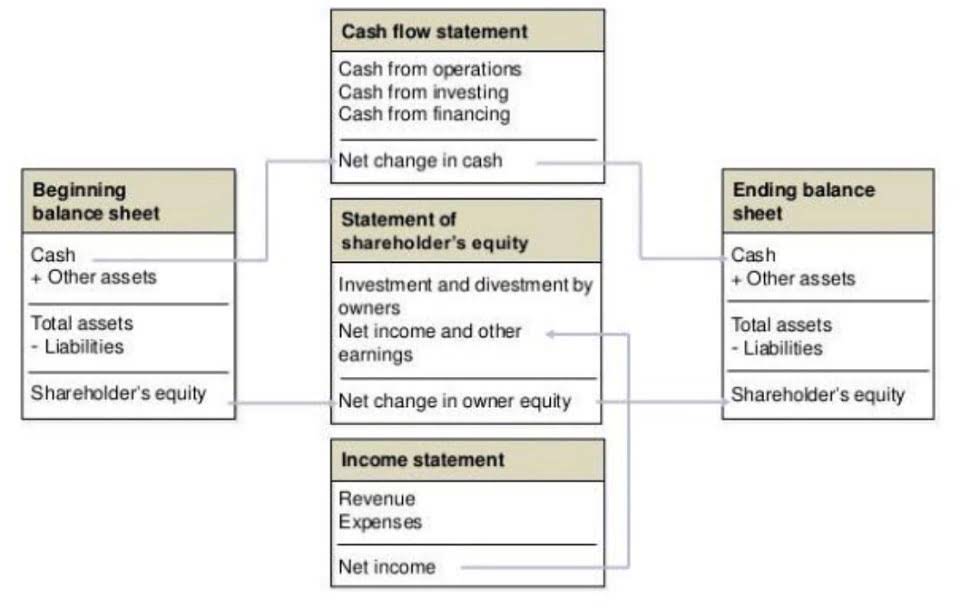
The contribution margin is a financial metric that represents the amount of revenue available to cover fixed costs and contribute to profit after deducting variable costs. All you have to do is multiply both the selling price per unit and the variable costs per unit by the number of units you sell, and then subtract the total variable costs from the total selling revenue. The CM ratio, or Contribution Margin ratio, is a financial metric used to assess the profitability of a product or service.
Analyst Certification FMVA® Program
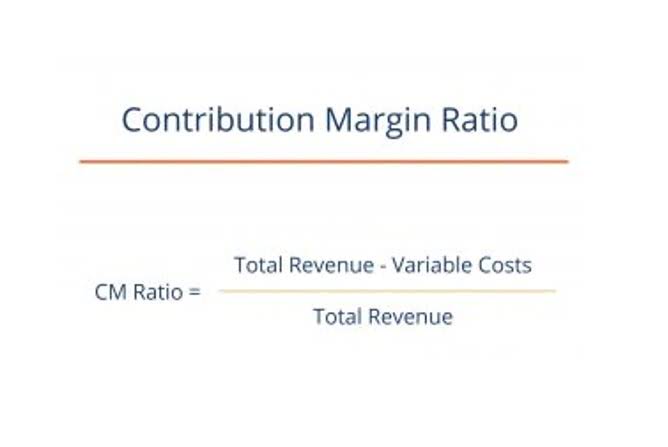
Adhering to regulations like the Robinson-Patman Act ensures fair competition. Understanding financial metrics is crucial for businesses aiming to optimize profitability and make informed decisions. One such metric, the contribution margin ratio, evaluates how sales impact overall profit. It highlights which products or services most effectively cover fixed costs and generate profits. If you need to estimate how much of your business’s revenues will be available to cover the fixed expenses after dealing with the variable costs, this calculator is the perfect tool for you.

This means your second product brings in more revenue than your first product, but isn’t as profitable because of the high variable cost to make it. Using the provided data above, we can calculate the price per unit by dividing the total product revenue by the number of products sold. For a quick example to illustrate the concept, suppose there is an e-commerce retailer selling t-shirts online for $25.00 with variable costs of $10.00 per unit.